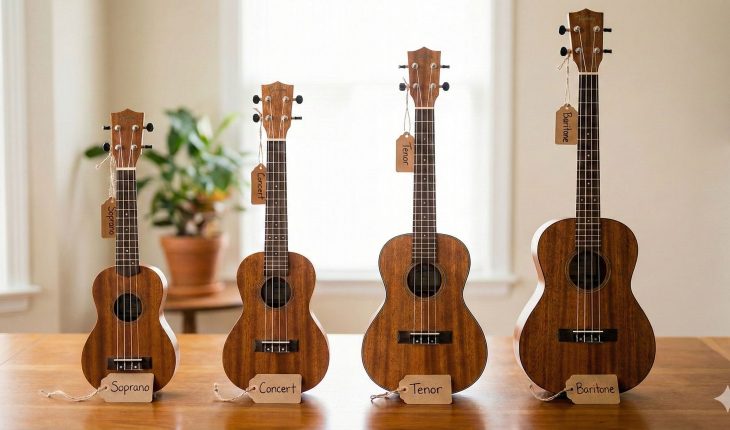
The Ultimate Guide to Ukulele Types: Soprano, Concert, Tenor, and Baritone
Whether you’re just starting your ukulele journey or looking to expand your collection, understanding the different types of ukuleles is essential. Each type—soprano, concert, tenor, and baritone—offers a unique playing experience, tone, and feel. In this guide, we’ll explore what sets each one apart in terms of size, tuning, tone, and best uses. We’ll also include a handy comparison table at the end to help you make the right choice.
1. Soprano Ukulele
Size: ~21 inches (53 cm)
Frets: 12–15
Tuning: G–C–E–A (standard tuning)
Tone: Bright, light, and punchy with a classic ukulele “plinky” sound
Sustain & Volume: Short sustain, lower volume compared to larger sizes
Best For: Traditional Hawaiian music, pop covers, children’s music
Ideal For:
- Beginners with smaller hands
- Players seeking portability and classic uke tone
- Those who want a light, cheerful sound
Considerations:
- Smaller fret spacing may be challenging for those with large hands
- Less resonance and dynamic range than larger ukes
2. Concert Ukulele
Size: ~23 inches (58 cm)
Frets: 15–18
Tuning: G–C–E–A (same as soprano)
Tone: Fuller, warmer, and louder than soprano, but still retains brightness
Sustain & Volume: Moderate sustain and volume
Best For: Pop, folk, worship, and singer-songwriter styles
Ideal For:
- Beginners looking for a bit more finger room
- Intermediate players seeking more tonal depth
- Performers who want better projection
Considerations:
- Slightly larger body may sacrifice a bit of the traditional “ukey” tone
3. Tenor Ukulele
Size: ~26 inches (66 cm)
Frets: 17–20
Tuning: G–C–E–A (reentrant or low-G)
Tone: Deeper, richer, and warmer with stronger projection and sustain
Sustain & Volume: Long sustain and high volume
Best For: Jazz, fingerstyle, classical, and solo performances
Ideal For:
- Intermediate to advanced players
- Fingerstyle techniques and chord melody playing
- Those needing more fretboard space
Considerations:
- Larger body size reduces portability
- May lose some of the traditional “island” ukulele character
4. Baritone Ukulele
Size: ~30 inches (76 cm)
Frets: 18–21
Tuning: D–G–B–E (same as the highest 4 strings of a guitar)
Tone: Deep, mellow, guitar-like sound with rich bass and resonance
Sustain & Volume: Long sustain, strong low-end presence
Best For: Folk, blues, classical, and accompaniment
Ideal For:
- Guitarists transitioning to ukulele
- Players wanting a lower, warmer sound
- Advanced players looking for tonal variety
Considerations:
- Different tuning may be confusing for traditional ukulele players
- Larger size may be harder to manage for small hands
Comparison Table: Ukulele Types at a Glance
| Ukulele Type | Size (inches) | Tuning | Frets | Tone Description | Best For | Ideal Player |
|---|---|---|---|---|---|---|
| Soprano | ~21″ | G–C–E–A | 12–15 | Bright, light, traditional | Hawaiian, kids, pop covers | Beginners, small hands |
| Concert | ~23″ | G–C–E–A | 15–18 | Warm, balanced, fuller | Folk, worship, general use | Beginners to intermediate |
| Tenor | ~26″ | G–C–E–A | 17–20 | Rich, deep, resonant | Jazz, fingerstyle, solo playing | Intermediate to advanced |
| Baritone | ~30″ | D–G–B–E | 18–21 | Mellow, bassy, guitar-like | Blues, accompaniment, classical | Guitarists, advanced players |
Final Thoughts: Choosing the Right Ukulele
Your perfect ukulele depends on your musical goals, physical comfort, and tonal preference. If you’re after that classic Hawaiian sound and portability, a soprano might be best. Want something with more volume and versatility? Try a concert or tenor. If you’re a guitarist or love deep, rich tones, the baritone is likely your match.
Tip: Try each size in person if possible, and pay attention to how it feels in your hands and sounds to your ears.
Happy strumming! 🌺🎶